7 Best Ways Brands Improve Sustainability Through Packaging?

Time:2026-10-17 Author:Mason
0%

Packaging sits at the center of the sustainability challenge. It protects products, yet often becomes waste within minutes.

The OECD’s Global Plastics Outlook reports that packaging generated about 40% of global plastic waste in 2019. Only 9% of plastic waste was ultimately recycled. These figures expose a difficult reality: attractive packaging can still create serious environmental costs. The United Nations Environment Programme estimates that plastic pollution could fall by 80% by 2040 through reuse, redesign, better recycling, and reduced consumption. However, progress depends on measurable action, not attractive claims.

So, how can brands improve sustainability through packaging? They can remove unnecessary layers, reduce material use, select responsibly sourced inputs, and design packs for reuse or recycling. Clear disposal instructions also matter. A recyclable package is ineffective when local facilities cannot process it. That detail is easy to miss.

Ellen MacArthur, founder of the Ellen MacArthur Foundation, has warned, “We cannot recycle our way out of the plastic pollution crisis.” Her statement supports a broader strategy. Brands must prioritize prevention before recycling. They should test packaging through life-cycle assessments, supplier audits, and real-world recovery data. No package is impact-free. A paper substitute may increase weight, water use, or transport emissions. A reusable container may require repeated use to justify its footprint.

This guide examines seven practical ways brands can improve packaging sustainability. It also questions common assumptions, because better packaging requires evidence, transparency, and continuous improvement.
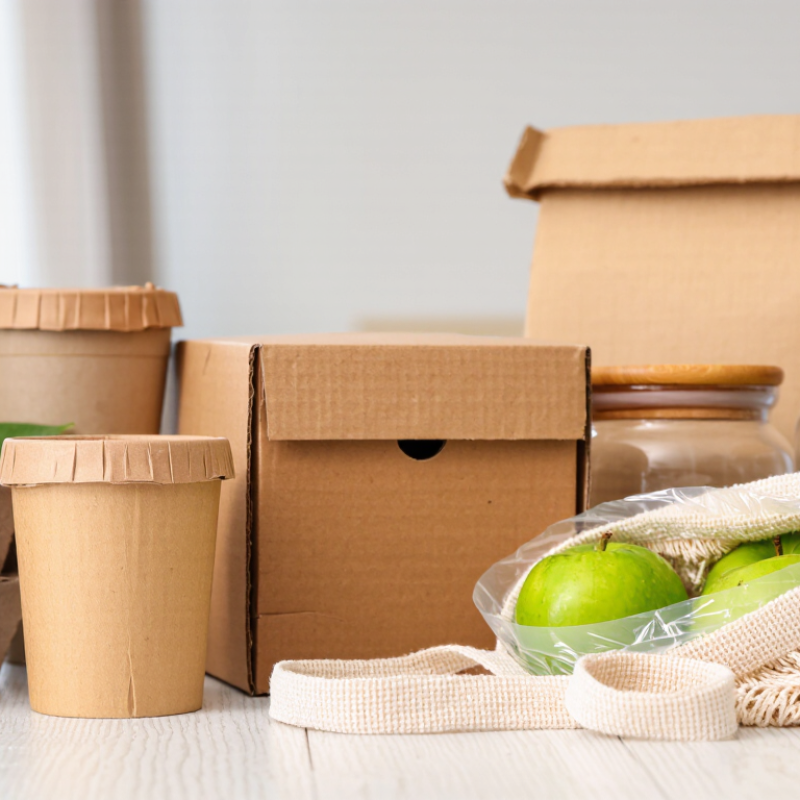
7 Best Ways Brands Improve Sustainability Through Packaging?

Reduce Packaging Material Through Lightweight and Right-Sized Design

7 Best Ways Brands Improve Sustainability Through Packaging

Reduce Packaging Material Through Lightweight and Right-Sized Design

Lightweighting starts with measurement, not guesswork. Packaging engineers can map material weight, product volume, and transport damage across each format. A thinner wall may reduce resin use, but it can also increase cracking, leakage, or product waste. That trade-off needs practical testing, including compression trials, drop tests, and temperature checks.

Right-sized packaging removes empty space around the product. It can also improve pallet density and reduce unnecessary transport volume. The OECD’s Global Plastics Outlook reports that packaging created about 40% of global plastic waste in 2019. This figure makes material efficiency difficult to ignore. However, smaller is not always better. A compact pack may require stronger protective layers or create filling problems on production lines.

Useful improvements often appear in small details. A package can use a narrower neck, thinner closure, shorter label, or molded-in measurement marks. Digital weight checks can detect overfilling and maintain consistent performance. The Ellen MacArthur Foundation has identified packaging as roughly 40% of global plastic production, showing why design changes can have wide effects.

The process is rarely perfect. Some lightweight designs fail during humid storage or long-distance shipping. Teams should record those failures instead of hiding them. Testing actual distribution routes, rather than relying only on laboratory conditions, produces more credible decisions. Material savings should be reported beside damage rates, recycled content, and product loss, not presented alone.

7 Best Ways Brands Improve Sustainability Through Packaging: Lightweight and Right-Sized Design

EU packaging waste increased from 157.3 kg per person in 2010 to 186.0 kg in 2022. Lightweight materials and right-sized packaging can help reduce unnecessary material use, transport weight and packaging waste.

Source: Eurostat, Packaging waste by waste management operations and type of material, dataset env_waspac.

Choose Recycled, Renewable, and Responsibly Sourced Materials

7 Best Ways Brands Improve Sustainability Through Packaging?

Packaging decisions begin with material choice. Recycled paper, post-consumer plastic, and recycled aluminium can reduce demand for virgin resources. The OECD reported that only 9% of global plastic waste was recycled in 2019. This gap shows why recycled content needs clear targets, not vague promises. Measure the percentage by weight. Check supplier records. Keep evidence.

Renewable materials can also support lower-impact packaging. Responsibly sourced fibre, certified through systems such as FSC or PEFC, helps protect forest management standards. Agricultural residues may replace part of petroleum-based plastic. However, renewable does not automatically mean sustainable. Land use, water consumption, transport, and end-of-life recovery still matter. No material is perfect. We often oversimplify this.

Tips: Start with a lightweight pack. Specify recycled content. Prefer mono-material designs when suitable. Ask suppliers for chain-of-custody documents and third-party test results. Avoid unsupported claims such as “eco-friendly.” The Ellen MacArthur Foundation recommends designing packaging for a circular economy, where materials stay useful instead of becoming waste. A practical review should test the package in real conditions: a damp warehouse, a crowded delivery box, and a household recycling bin. Some sustainable choices fail there. That is worth admitting.

Replace Single-Use Formats with Reusable and Refillable Systems

Replacing single-use packaging with reusable and refillable systems can reduce material waste, but the design must fit real customer habits. A durable container needs enough uses to justify its added production impact. It also needs clear return instructions, safe cleaning, and convenient collection points. In practical pilots, return rates often depend on small details, such as deposit refunds and nearby drop-off locations. That matters.

Refill systems work best when customers can refill quickly without spills or confusion. Use sturdy pumps, wide openings, and visible volume markings. Track container cycles, breakage, transport distance, cleaning energy, and refill frequency. These measures create stronger evidence than attractive sustainability claims alone. The system will not be perfect. Some containers will disappear, break, or return dirty. Brands should report those losses and adjust the process instead of hiding them.

Tips: Start with one product category and test it locally. Offer a simple return route, such as collection during the next delivery. Use labels that explain cleaning and refill steps in plain language. Compare the system with the original single-use format using consistent data. Ask customers where the process feels inconvenient. Keep it simple. Measure the misses.

Design Packaging for Recycling, Composting, and Circular Recovery

Packaging sustainability starts before artwork reaches the printer. Teams should map the package’s recovery route, not just its material list. A recyclable design needs compatible materials, accessible collection, and a facility that can process it. In practice, a simple mono-material pouch or rigid container often creates fewer sorting problems. Avoid dark pigments, inseparable layers, and oversized labels when local equipment struggles with them. Keep closures, sleeves, and adhesives compatible with the main package whenever possible. Test the empty package, filled package, and damaged package.

Composting requires equal care. A package marked compostable may fail if no suitable industrial composting site accepts it. Use recognized certification and clear disposal instructions. Do not imply backyard composting unless testing supports that claim. Small details matter: food residue, label adhesives, coatings, and ink coverage can affect processing. A facility interview can reveal more than a marketing brief. Ask what it accepts, how it sorts materials, and what happens after collection. Document those answers.

Circular recovery expands the design question beyond disposal. Reusable formats need durable parts, return logistics, cleaning capacity, and enough repeat use to justify their footprint. Recycled content can reduce demand for virgin material, but supply quality and contamination remain practical limits. Measure package weight, recovery rate, reuse cycles, and rejected loads. Review the results with converters and waste operators. Some choices will remain imperfect. That is useful information, not failure. Improve the next version with evidence, not attractive claims. Clear disposal guidance can reduce contamination, but instructions cannot repair a poorly designed package.

Measure Packaging Impacts and Guide Consumers Toward Better Disposal

Packaging sustainability improves when decisions are measured, not guessed. A practical assessment tracks material weight, recycled content, manufacturing energy, transport distance, and likely end-of-life treatment. Teams can compare a lighter pouch, a refill format, or a mono-material container against the current design. Life-cycle studies help, but their results depend on system boundaries and regional waste data. Supplier declarations should be checked with invoices, specifications, and periodic third-party testing. That evidence creates a defensible record for environmental claims. Still, the data is rarely perfect. Small suppliers may lack detailed energy records, while disposal outcomes remain difficult to verify. Companies should disclose assumptions instead of presenting estimates as universal facts.

Measurement matters only when people can act on it. Clear disposal instructions should appear beside the relevant package component. Use plain verbs: empty, flatten, separate, and check local collection rules. Add a short web address or scannable code for region-specific guidance. Instructions must explain whether caps, films, labels, and pumps stay attached. A recycling symbol alone is not enough. Field testing can reveal practical failures, such as unreadable ink, confusing icons, or instructions hidden under a flap. Companies can measure success through disposal surveys, contamination rates, customer questions, and returned packaging audits. These results should influence the next design cycle, even when they expose an inconvenient truth. A technically recyclable package may still be discarded incorrectly. That uncomfortable finding is useful.

7 Best Ways Brands Improve Sustainability Through Packaging? - Measure Packaging Impacts and Guide Consumers Toward Better Disposal

Sustainability Action Primary KPI Recommended Data to Collect Evidence-Based Measurement Method Consumer Guidance Expected Environmental Benefit Reference Basis
1. Reduce Packaging Weight Packaging mass per product sold Grams per unit Material mix Annual volume Compare the redesigned package with the previous specification using: mass reduction (%) = (baseline mass − new mass) ÷ baseline mass × 100. Explain that less material generally means less waste after use. Do not claim a benefit unless the complete package performance remains adequate. Lower material consumption, reduced waste generation, and potentially lower transport emissions. ISO 14040 and ISO 14044 life-cycle assessment principles
2. Increase Verified Recycled Content Post-consumer recycled content by weight PCR percentage Virgin material mass Supplier evidence Report recycled content as: recycled material mass ÷ total packaging mass × 100. Keep supplier declarations or chain-of-custody records. State the exact component that contains recycled material and clarify whether local recycling systems accept it. Can reduce demand for virgin resources; the result depends on material type, energy source, collection, and processing. ISO 14021 environmental claims guidance; FTC Green Guides
3. Design for Material Recovery Share of packaging components accepted in the intended recycling stream Component count Material type Local acceptance Record every component, including labels, closures, liners, coatings, and adhesives. Verify acceptance with the relevant local collection or sorting guidance. Use clear instructions such as: “Empty, rinse if required, replace cap, and place in the recycling bin where accepted.” Better compatibility with sorting and reprocessing systems and fewer incorrectly placed components. APR Design Guide; local recycling authority requirements
4. Prefer Simple, Compatible Structures Number of separable materials and problematic components Material layers Adhesive type Coating type Measure the number of material layers and identify components that may interfere with collection, sorting, pulping, or reprocessing. Tell users which parts should be separated before disposal and which parts should remain attached, based on local instructions. Simplified structures can improve recovery quality and reduce contamination when they are compatible with existing infrastructure. Recyclability assessment practices from APR and paper-recycling guidance from CEPI
5. Expand Reuse or Refill Models Verified number of reuse cycles per package Cycle count Return rate Loss and damage rate Test how many complete use-and-return cycles the package achieves. Include reverse logistics, washing, replacement, and end-of-life impacts in the assessment. Provide precise return or refill instructions, collection locations, cleaning requirements, and information about what happens after return. Reuse may reduce single-use packaging demand when return rates and package durability are high enough to offset washing and transport impacts. ISO 14040 and ISO 14044 life-cycle assessment principles
6. Improve Distribution Efficiency Product-to-packaging ratio and transport cube utilization Package volume Product volume Units per pallet Track: product-to-packaging ratio = product mass or volume ÷ packaging mass or volume. Also record pallet density, shipment damage, and empty space. Explain that packaging must provide sufficient protection; reducing damage is part of the total sustainability calculation. More efficient packing can reduce shipments, storage space, and transport-related emissions, provided product loss does not increase. GHG Protocol Product Life Cycle Accounting and Reporting Standard
7. Make Disposal Instructions Clear and Local Correct disposal or sorting rate Instruction visibility Consumer test results Regional acceptance Test whether users correctly identify the disposal route. Review instructions against the collection rules of each target market instead of using a universal recycling claim. Use direct wording: “Recycle only where accepted locally,” “Check your local waste authority,” or “Dispose of in general waste.” Clear, accurate guidance can reduce contamination and prevent recyclable materials from entering unsuitable waste streams. FTC Green Guides; ISO 14021; local waste-management authority guidance

Data note: The KPIs and formulas above are measurable packaging sustainability indicators. Environmental benefits should be verified through a product life-cycle assessment, documented supplier evidence, and location-specific collection data. Recycling availability and disposal instructions vary by region.

FAQS

How can packaging teams reduce material without causing damage?

Measure package weight, product volume, cracking, leakage, and transport damage. Test thinner walls with compression, drop, and temperature trials. Less material is not always better.

Why does right-sized packaging matter?

It removes empty space and can fit more units onto each pallet. This may reduce transport volume and handling costs. A smaller package can still need extra protection.

Which small design changes can reduce packaging material?

Teams can shorten labels, narrow package necks, and reduce closure thickness. Molded measurement marks may replace separate printed components. Digital weight checks can prevent overfilling.

How should companies report lightweighting results?

Report material savings beside damage rates, recycled content, and product loss. Include results from real delivery routes. Laboratory testing alone may create false confidence.

What makes a package easier to recycle?

Use compatible materials and avoid inseparable layers when possible. Keep closures, sleeves, adhesives, and labels compatible with the main package. Test filled and damaged packages, not just empty ones.

Does a compostable package always belong in home compost?

No. Compostable packaging may require an industrial facility with suitable processing equipment. Use recognized certification and clear disposal instructions. Do not promise backyard composting without evidence.

What should teams check before making recycling or composting claims?

Interview local recovery facilities about accepted materials and sorting practices. Ask what happens after collection. Attractive wording cannot repair a poorly designed package.

When is reusable packaging a practical choice?

Reusable formats need durable parts, return logistics, cleaning capacity, and repeated use. Measure return rates, reuse cycles, package weight, and rejected loads. The system may still be imperfect. That needs honest review.

Conclusion

Brands can improve sustainability through packaging by reducing unnecessary material, using lightweight and right-sized designs, and avoiding excess layers that add weight and waste. Choosing recycled, renewable, and responsibly sourced materials can further reduce reliance on virgin resources while supporting more responsible production. Another effective approach is replacing single-use formats with reusable or refillable systems that extend packaging life and reduce disposal volumes.

Sustainable packaging should also be designed for recycling, composting, or other circular recovery methods, with simple material combinations that are easier to process. Clear labeling and practical disposal instructions can help consumers make better end-of-life decisions. In addition, measuring packaging impacts—such as material use, carbon emissions, recyclability, and recovery rates—enables continuous improvement. By combining thoughtful design, responsible materials, reuse models, circular recovery, consumer education, and transparent measurement, brands can reduce environmental impacts while creating packaging systems that are more efficient and sustainable.

Mason

Mason

Mason is a seasoned marketing professional with a deep expertise in the company's offerings and a passion for driving brand awareness. With a strong background in digital marketing strategies, he has an innate ability to connect with diverse audiences and effectively communicate product benefits.......